

Capacity Building
Capacity building ensures that there is a skilled, adaptable workforce capable of delivering Tuina therapy at a high standard in diverse healthcare environments. The quality of training and practitioner competence currently varies significantly across institutions and regions, limiting the credibility and scalability of Tuina therapy. The purpose of this pillar is to create sustainable educational and training pathways that prepare practitioners, educators, and researchers to meet future needs. Planned activities include designing curricula that integrate classical Tuina theory with biomedical sciences, establishing simulation-based training to improve manipulative skills, and building international exchange programmes for faculty and students. Emerging technologies will also play a critical role in shaping the future of Tuina therapy. Artificial intelligence and automation, such as robotic Tuina devices and AI-driven teaching tools, will be integrated into training and practice to reduce practitioner fatigue, enhance treatment consistency, and expand access to Tuina therapy globally. By involving universities, teaching hospitals, licensing boards, and technology developers, capacity building will ensure that Tuina therapy continues to evolve as both a traditional practice and a modern, technology-enabled therapy.
NTU Tuina Training Programme
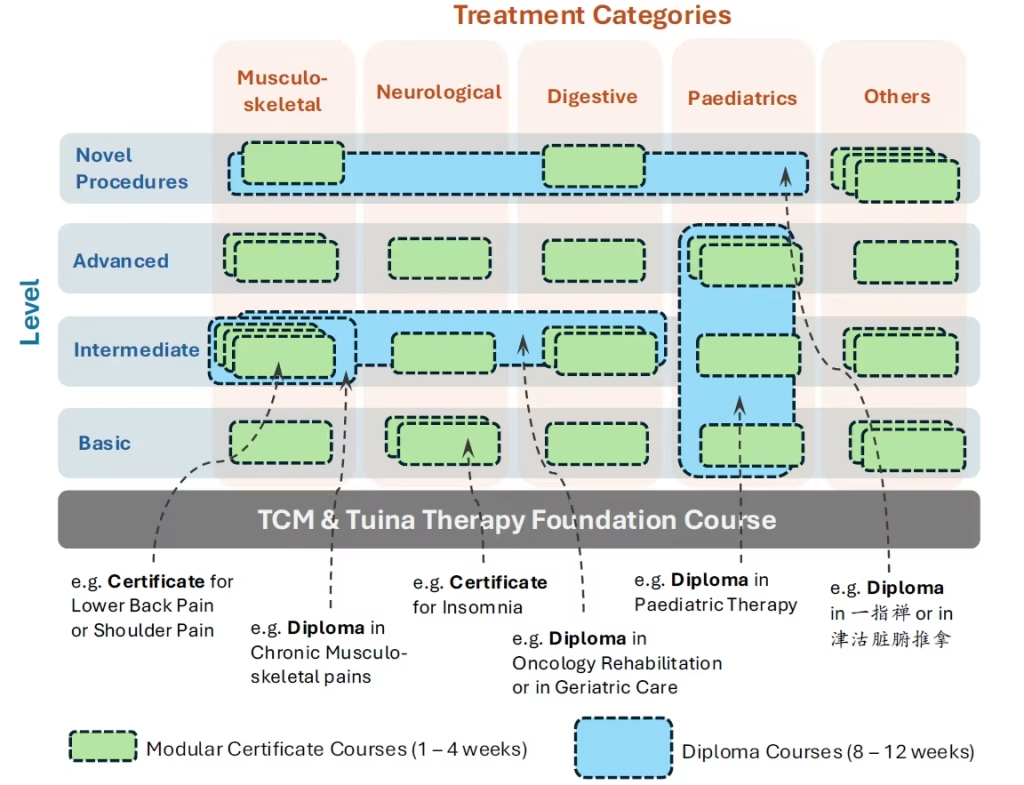
The Tuina Therapy Training Series is built on a structured, competency-based framework designed to support progressive learning and clinical mastery. The programme begins with a foundational course in Traditional Chinese Medicine (TCM) and Tuina therapy, which serves as the prerequisite for all subsequent training. From there, learners advance through Basic, Intermediate, and Advanced levels via modular certificate courses and longer diploma pathways. Each module focuses on treatment domains including musculoskeletal conditions, neurological and paediatric care, digestive disorders, and specialised procedures, allowing practitioners to develop targeted expertise while accumulating recognised qualifications over time.
This modular framework is designed for both flexibility and scalability. Short, stackable certificates can be combined into diploma-level qualifications, enabling working professionals to upskill while maintaining clinical practice. Delivered through a blend of clinical demonstrations, simulation-based learning, and supervised internships, the training emphasises real-world application alongside academic rigour. As the framework is adopted across the Global Tuina Alliance network, it will be localised to different healthcare systems while maintaining a shared standard — creating a globally aligned, evidence-based approach to Tuina education and ensuring consistency in training, practice, and professional recognition.
Learn more about the NTU Tuina Therapy Training Programme here.